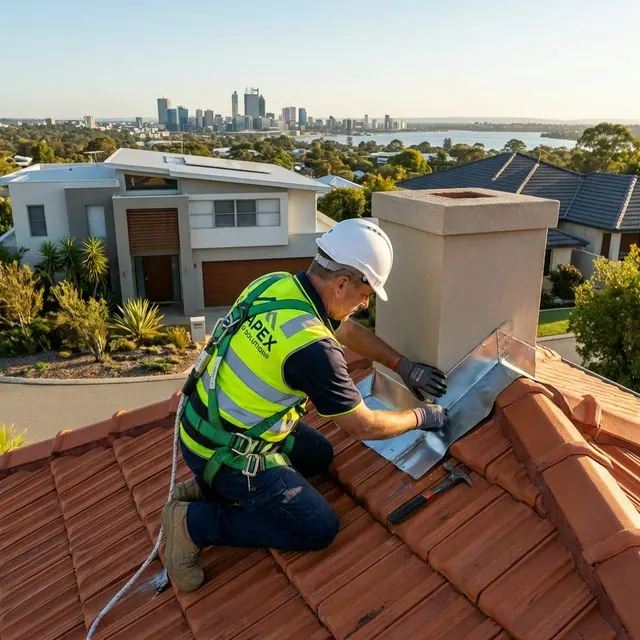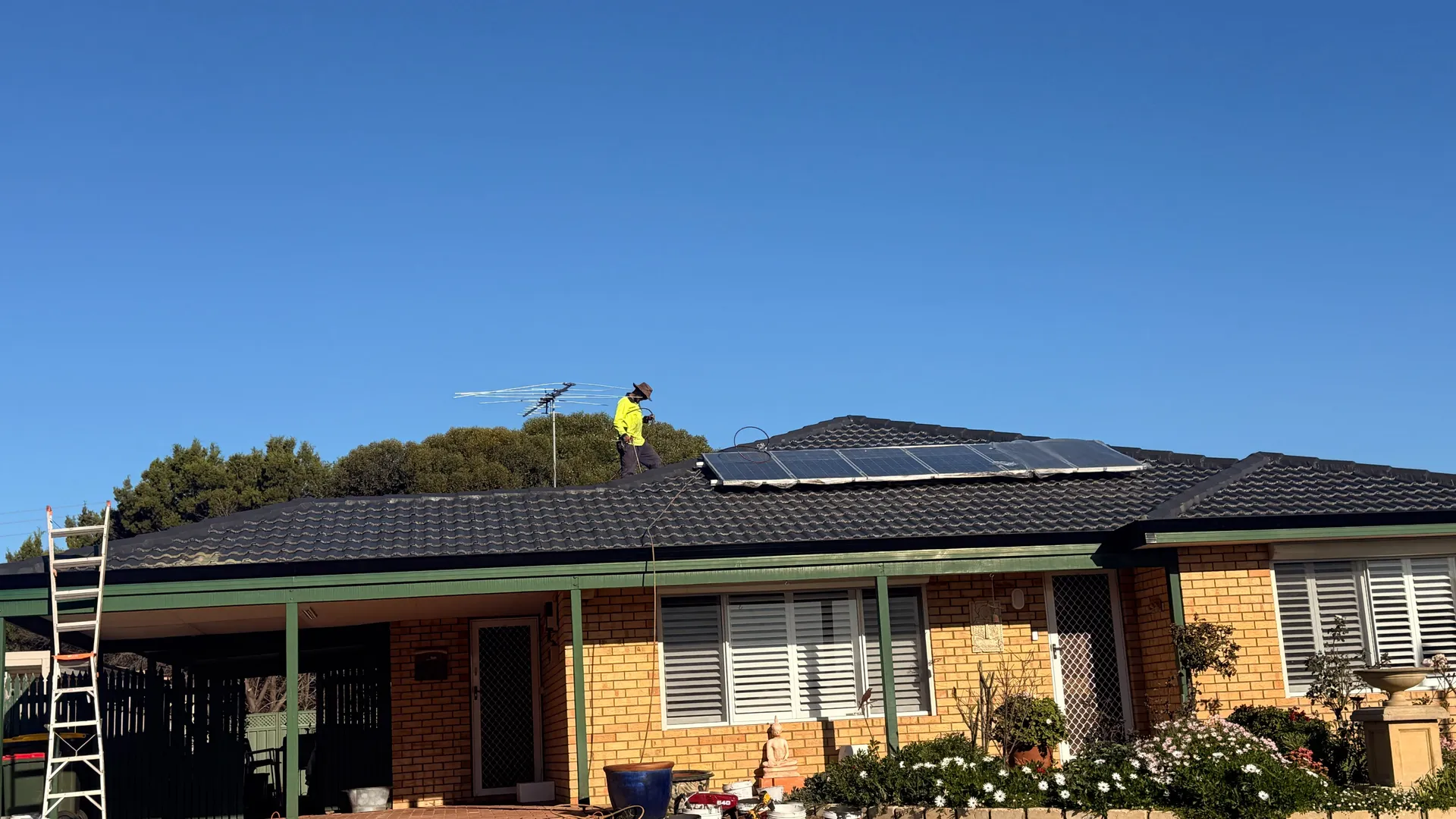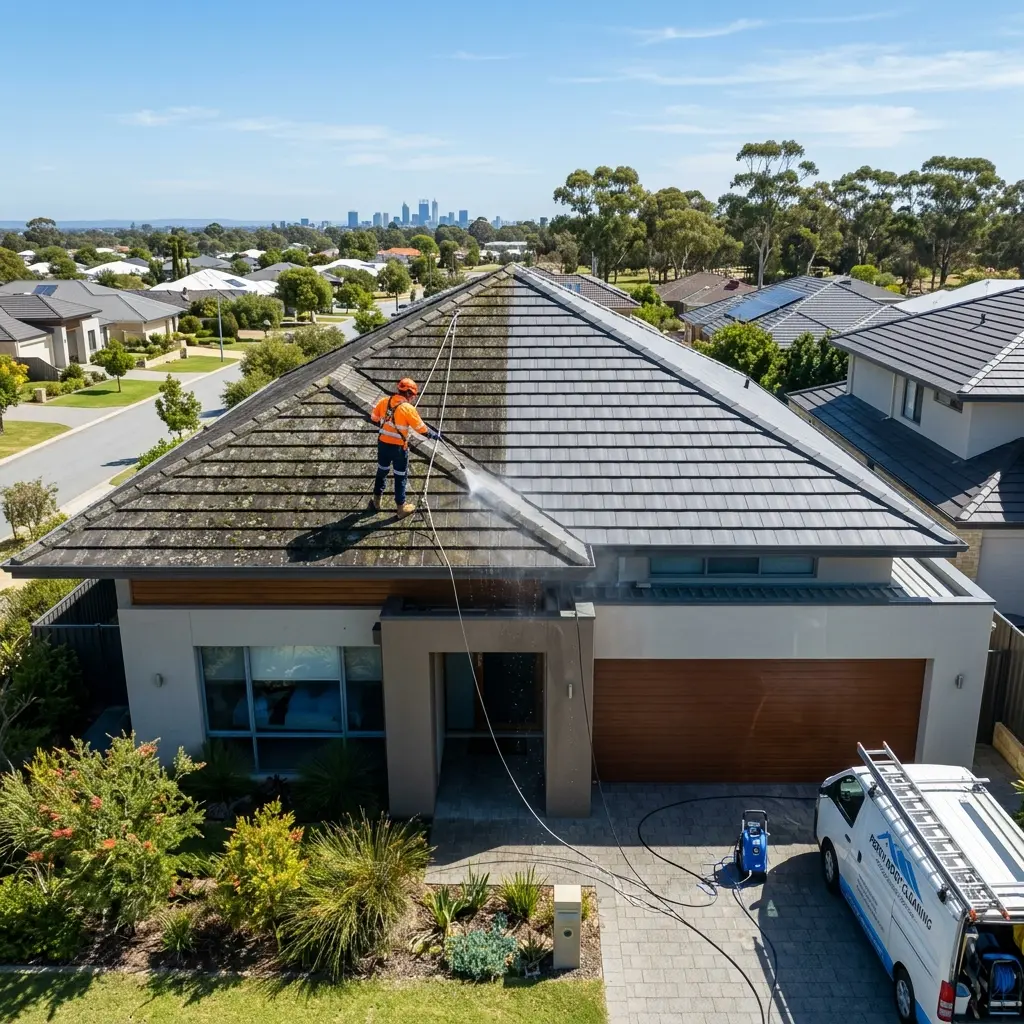
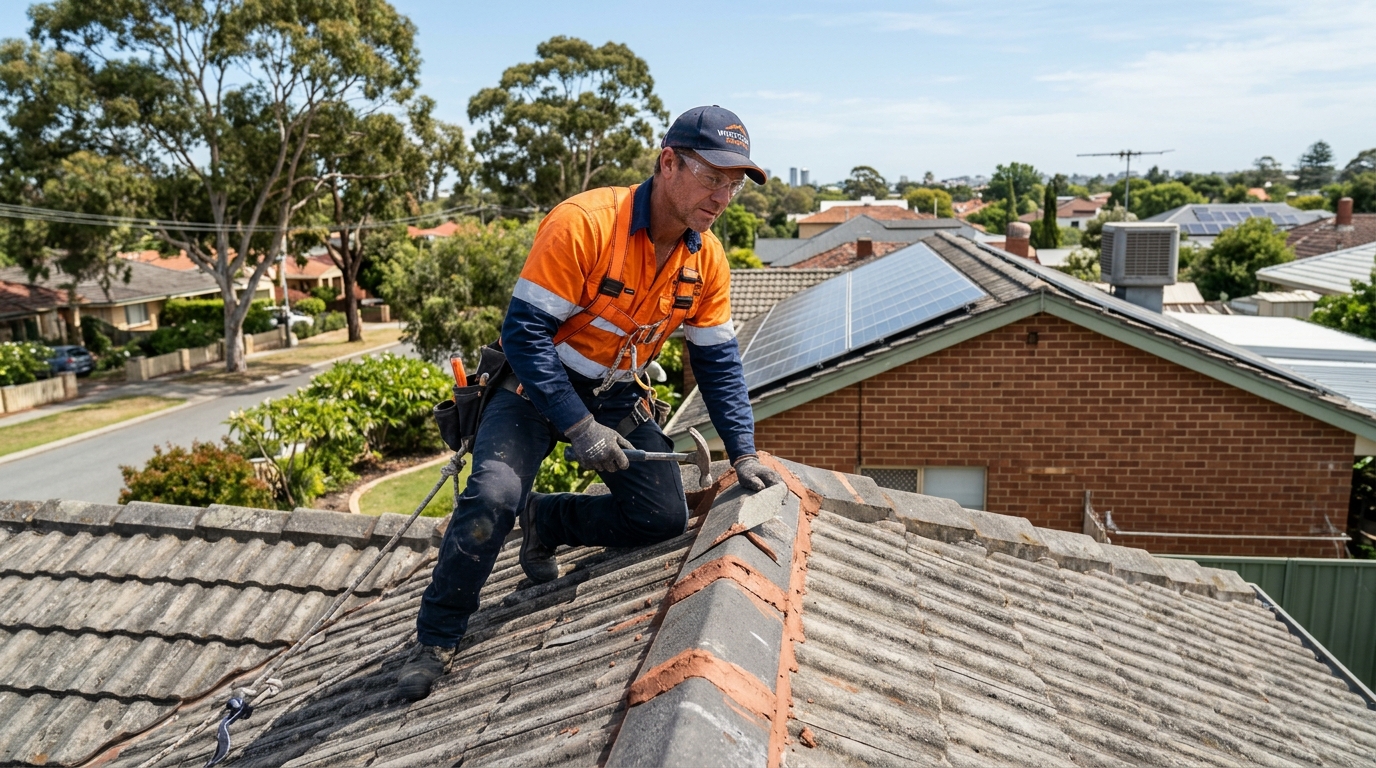
Your roof is the hardest-working part of your home, and in Western Australia it never gets a day off. Summer bakes it at 40°C-plus, salt-laden winds sweep across from the Indian Ocean, winter cold fronts hammer it with heavy rain, and the afternoon Fremantle Doctor puts constant thermal stress on every join. Most roofs in Perth don't fail overnight—they deteriorate slowly from small, unspotted issues like hairline ridge cap fractures, dislodged concrete tiles, or leaf-clogged valley trays.
This comprehensive 2026 guide breaks down the early warning signs every Perth homeowner should know, explains what factors dictate repair and restoration costs, and details how prompt, compliant maintenance protects your home's structural integrity and resale value.
How Perth's Harsh Climate Impacts Your Roof
- Intense Summer UV and Thermal Shock Roof tiles and ridge cap bedding expand significantly during blistering 40°C+ summer days and contract rapidly as temperatures drop at night. Over thousands of cycles, traditional sand-and-cement mortar becomes brittle, develops micro-fractures, and eventually dislodges. Inland suburbs such as Morley, Midland, and Armadale experience especially extreme temperature swings, accelerating pointing failure.
- Coastal Salt Air Corrosion If your property is situated along coastal corridors—from Fremantle, Cottesloe, and Scarborough up to Joondalup and south to Rockingham—airborne salt is a constant threat. Salt accelerates galvanic corrosion on metal valley irons, roof fasteners, guttering, and unsealed Colorbond sheet edges. Regular inspection of metal flashing is vital in these salt zones.
- Winter Cold Fronts & Driven Rain Perth's winter storms bring fierce, sideways-driven rain. Water is forced uphill underneath loose tiles or cracked pointing, soaking into roof timber frames and ceiling plasterboards. Regular pre-winter maintenance ensures ridge caps are securely locked down against severe storm gusts.
Key Warning Signs Your Roof Needs Attention Early intervention prevents minor leaks from turning into catastrophic structural damage. Check for these warning signs:
• Cracked or Missing Mortar: If you see crumbly sand or loose cement along the hips and ridges, the capping is compromised and water can penetrate during wind-driven rain. • Ceiling Stains or Peeling Paint: Dark water rings, bubbling paint, or damp smells in the ceiling cavity indicate water is entering past broken tiles or failed flashings. • Rusted Valley Irons: Debris trapped in internal valleys holds moisture against the metal, leading to pinhole rust holes that channel rain directly into wall cavities. • Sagging or Dislodged Tiles: Shifted tiles allow sunlight and moisture into the roof space, compromising timber batten stability. • Excessive Moss and Lichen: Lichen roots cling into concrete tile pores, retaining moisture and causing surface pitting under Perth's harsh sun.
Understanding Roof Repair & Restoration Costs in Perth Every home in WA is engineered differently, meaning reputable tradesmen price jobs based on actual site conditions rather than generic guesstimates. Here are the key factors that determine your roof repair or restoration investment:
• Roof Pitch and Accessibility: Steeper roofs or double-storey homes require specialized safety harnesses, edge protection, or scaffolding in compliance with WorkSafe WA safety standards. • Ridge Capping Linear Metres: The total length of ridge caps that need re-bedding and re-pointing with flexible polymer compounds. • Tile Condition & Availability: Whether cracked concrete or terracotta tiles need matching replacements from licensed local tile salvage suppliers. • Valley Irons & Lead Flashings: Replacing rusted tin valleys with heavy-duty Colorbond valley irons and re-sealing chimney or vent flashings. • Full Restoration vs Targeted Repairs: A full restoration includes high-pressure washing, complete re-pointing with flexible acrylic mortar, anti-fungal treatment, and a 3-coat UV-reflective roof membrane system. Targeted maintenance focuses purely on leak points and capping stability.
Tip: Always ensure your contractor provides a comprehensive on-site roof inspection before quoting, ensuring there are no hidden surprises once work begins.
Why Modern Flexible Pointing is Non-Negotiable (AS 2050) Old sand-and-cement mortar lacks elasticity. Once the roof expands in Perth's heat, traditional mortar cracks permanently. Under modern Australian Standards (AS 2050), reputable roofers apply flexible polymer-based pointing compounds.
Flexible pointing adheres strongly to the tile surface, flexes with thermal movement without cracking, and forms a watertight barrier that withstands severe weather and high winds for decades.
DIY vs. Licensed Professional Roofing Walking on tile or metal roofs carries significant safety hazards—slippery surfaces, brittle aged tiles that crack under foot pressure, and electrical cable hazards in roof spaces. Licensed and fully insured roofing specialists have the necessary safety equipment, high-grade materials, and trained expertise to diagnose hidden leaks accurately without damaging your existing roof structure.
Book Your Free Perth Roof Inspection Today Don't wait for the next winter cold front to discover a leak. Whether you require ridge cap repointing, leak detection, or a full protective roof restoration, our experienced local tradesmen are ready to help across all Perth suburbs.
Call our local Perth team directly on 0438 922 676 or request an obligation-free inspection through our Free Roof Inspection & Quote Form.